
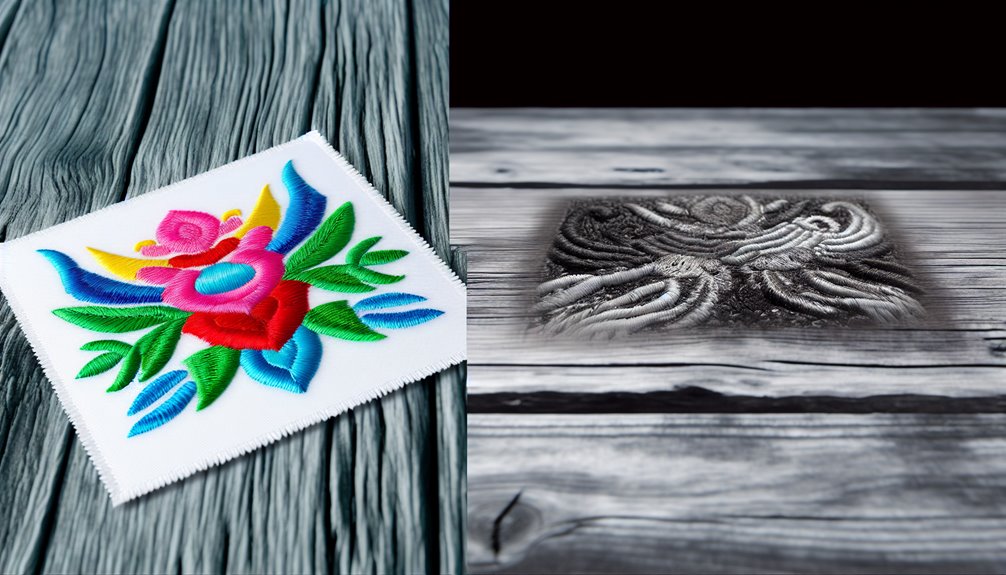
Sublimation patches and embroidery offer distinct customization methods for fabric. Sublimation uses dye to create vibrant, photo-quality designs on polyester, while embroidery stitches traditional designs for durability and texture on varied materials. Sublimation excels in color variety and intricate detail, but may fade over time. Embroidery provides a classic look but can be limited by thread colors and design complexity. Your choice influences cost, aesthetics, and longevity considerably; there's much more to discover.
Understanding Sublimation Patches
When considering the world of fabric art, sublimation patches stand out as a unique and modern option. You might wonder, what makes them so distinct? The sublimation process plays a key role here.
It involves dye transfer, where the dye transforms from a solid to a gas without becoming liquid, embedding colors deeply into the fabric. This method guarantees vibrant, long-lasting designs that don't fade easily.
However, there's a catch—you must use polyester or polymer-coated materials for successful dye transfer. Despite this limitation, sublimation patches offer a clean, smooth appearance, often favored for their photographic quality.
Understanding this process helps you appreciate the art behind these patches, making informed choices when selecting fabric embellishments. Stay curious and explore the possibilities!
Exploring Embroidery Techniques
As you explore embroidery techniques, it's essential to take into account traditional stitching methods that have stood the test of time, providing durability and texture to your designs.
Choosing the right thread is equally important, as it can affect the color, sheen, and overall quality of your embroidery work.
However, be mindful that complex designs may present challenges, requiring patience and precision to guarantee every detail is captured accurately.
Traditional Stitching Methods
Embroidery, a time-honored craft that dates back thousands of years, continues to hold a special place in the world of textile arts. You might find yourself captivated by the beauty of traditional techniques and diverse stitching styles. These methods, such as satin stitch, chain stitch, and cross-stitch, allow you to create intricate patterns that stand the test of time. Each technique offers a unique way to express creativity while adhering to tradition.
| Stitch Type | Characteristics | Uses |
|---|---|---|
| Satin Stitch | Smooth, fills spaces completely | Floral designs, monograms |
| Chain Stitch | Looped, creates textured lines | Outlines, decorative borders |
| Cross-Stitch | X-shaped, grid-based | Patterns, detailed imagery |
Thread Selection Importance
Choosing the right thread is vital in embroidery, as it directly impacts the final appearance and durability of your work.
You'll want to focus on thread quality, ensuring it's strong enough to withstand wear and time. High-quality threads are less likely to fray or break, which preserves your design's integrity.
Furthermore, opting for colorfast options is essential. These threads maintain their color even after washing, preventing your vibrant designs from fading.
Consider the material too; cotton, polyester, and rayon each offer different benefits. Cotton is strong and natural, while polyester is resilient and colorfast. Rayon provides a lustrous finish but isn't as durable.
Weigh these factors carefully, because the thread you choose can make or break your embroidery masterpiece.
Design Complexity Challenges
While exploring embroidery techniques, you'll quickly discover that design complexity poses significant challenges.
Embroidery, with its tactile charm, often struggles when faced with intricate designs. The more detailed the artwork, the greater the design scalability challenges become. You might find that transferring a complex pattern into thread requires simplifying the design, which can sometimes compromise the original vision. Each stitch must be carefully planned, and this can make highly detailed images difficult to execute.
Moreover, not all fabrics handle intricate designs well. Dense stitching can cause puckering, making it essential to choose the right fabric and stabilize it properly.
As you probe deeper, remember that while embroidery's handmade quality is appealing, it demands meticulous planning to guarantee your designs are both beautiful and feasible.
Comparing Material Requirements
When comparing sublimation patches to embroidery, you'll need to take into account fabric compatibility, as sublimation works best with polyester while embroidery can be used on a wider range of materials.
The choice between thread and ink is essential; embroidery requires threads that add texture, whereas sublimation uses ink to integrate designs seamlessly into the fabric.
Additionally, the equipment and tools for each method differ greatly—embroidery demands needles and machines tailored for stitching, while sublimation needs a heat press and specialized printers.
Fabric Compatibility Differences
If you're thinking about customizing fabrics, understanding the compatibility of different materials with sublimation patches and embroidery is essential. Each technique has specific fabric types that work best.
Sublimation patches require polyester fabrics, as the dye bonds with the fibers, ensuring vibrant, lasting designs. Natural fibers like cotton aren't suitable for sublimation because the dye can't penetrate the fabric effectively.
On the other hand, embroidery is more versatile regarding material suitability. It can be applied to a wide range of fabrics, including cotton, wool, and blends. However, thicker materials may pose challenges, requiring specialized equipment.
Knowing these fabric compatibility differences helps you choose the right method, ensuring your designs look great and last long on the chosen material.
Thread vs. Ink
Understanding the materials involved in sublimation patches and embroidery is just as important as knowing which fabrics they work best with.
When you're working with embroidery, thread types become your main concern. You'll find options like cotton, polyester, and silk, each bringing different textures and durability. These threads create a raised, tactile design, offering a classic, handcrafted feel.
In contrast, sublimation relies on ink varieties, which are absorbed into the fabric. This process uses special dye-based inks that bond with polyester fibers, creating vibrant, long-lasting prints.
It's a smooth finish, perfect for detailed, colorful images. Knowing the material requirements helps you choose between the traditional appeal of embroidery or the vivid, contemporary look of sublimation, ensuring your project's success.
Equipment and Tools Needed
Starting on a project with either sublimation patches or embroidery requires understanding the specific equipment and tools you'll need to succeed.
For sublimation patches, you'll want a sublimation printer and a heat press. These tools transfer your designs onto fabric. Don't forget color printers for vibrant, detailed images.
Embroidery, on the other hand, demands embroidery machines and stitching tools. You'll also need thread cutters to trim excess thread and fabric cutters for precise patch shapes.
Both methods benefit from design software, helping you craft accurate patterns. Make certain you choose equipment suited to your project's scale and complexity.
Each tool plays a vital role, and having the right ones guarantees your project's success. Plan carefully, and you'll achieve stunning results.
Analyzing Color Capabilities
When considering the color capabilities of sublimation patches versus embroidery, it's crucial to understand the distinct differences each method offers.
Sublimation patches deliver unmatched color vibrancy, allowing for a full spectrum of hues that maintain their brilliance over time. This process dyes the fabric itself, producing smooth gradients and intricate details.
On the other hand, embroidery relies on thread colors, limiting you to a predefined palette. While embroidery provides texture and depth, it can't match the design versatility sublimation patches offer.
If your project requires intricate patterns and a wide range of colors, sublimation is the way to go.
However, if you're aiming for a classic, textured look, embroidery might suit your needs better. Understanding these differences aids in making informed decisions for your creations.
Examining Design Complexity
When examining design complexity, you need to contemplate how detail and precision come into play, especially between sublimation patches and embroidery.
Sublimation allows for intricate designs with a wide range of color options, but it lacks the texture and depth that embroidery naturally provides.
On the other hand, embroidery offers a tactile quality that can enhance a design's richness, though it might limit the complexity and variety of colors you can achieve.
Detail and Precision
Exploring the intricacies of sublimation patches versus embroidery reveals significant differences in detail and precision.
When you examine these methods, you'll notice that sublimation offers exceptional detail accuracy. This technique allows for crisp lines and intricate patterns due to its digital printing process. With sublimation, every nuance of a design can be captured, making it ideal for complex images.
In contrast, embroidery relies on precision techniques involving thread and stitch placement, which can limit the level of detail achievable. While embroidery adds a textured, tactile quality to designs, its precision is constrained by thread thickness and stitching capabilities.
If your design requires high detail accuracy, sublimation might be more suitable. However, for classic textured aesthetics, embroidery could be the better choice.
Color Variety Options
Color variety plays a pivotal role in determining the complexity and vibrancy of your designs, much like the detail and precision we examined earlier. When considering sublimation patches versus embroidery, understanding color psychology and color trends is essential. Sublimation allows for a wider range of colors, offering intricate gradients and photographic details that make your design pop. Embroidery, however, is limited by thread colors, which might restrict your palette but offer a classic, timeless look.
| Aspect | Sublimation Patches | Embroidery |
|---|---|---|
| Color Range | Unlimited, vibrant | Limited, thread-based |
| Gradients | Smooth, detailed | Challenging to achieve |
| Trend Adaptation | Quick to follow trends | Slower to adapt |
Choose wisely based on your design's complexity and intended impact.
Texture and Depth
Texture and depth are essential elements in the world of design, especially when deciding between sublimation patches and embroidery. You need to understand how each method affects texture contrast and depth perception.
Embroidery offers a tangible, raised texture that adds a three-dimensional feel, making designs stand out. This physical depth can enhance the tactile experience, giving your patch a rich, detailed appearance.
In contrast, sublimation patches provide a smooth finish, which may lack the physical depth but compensates with vibrant color and intricate details. Although the texture contrast isn't as pronounced, sublimation excels in capturing complex designs with precision.
Consider what your design requires: the tactile appeal of embroidery or the detailed, flat finish of sublimation. Both methods offer unique benefits, depending on your needs.
Assessing Durability and Longevity
When evaluating the durability and longevity of sublimation patches versus embroidery, it's crucial to take into account how each method interacts with wear and time.
Sublimation patches, with their ink-infused designs, may fade over time, especially with frequent washing or exposure to sunlight. This fading is a key durability factor, affecting their overall appearance.
Embroidery, on the other hand, tends to stand up better to repeated use and washing. The threads used are generally resistant to wear, which often results in greater longevity.
However, it's significant to recognize that the durability of embroidery can be compromised by fraying or snagging, depending on the thread quality and stitching.
When making longevity comparisons, consider your specific needs and how each method aligns with them.
Evaluating Cost Considerations
As you assess the durability and longevity of sublimation patches and embroidery, remember that cost is another critical factor influencing your decision.
A thorough cost analysis will help you understand which option aligns better with your budget. Sublimation patches can be more cost-effective for large quantities due to lower material and production expenses, making them suitable for tighter budgeting strategies.
However, embroidery often incurs higher costs because of its intricate craftsmanship and time-intensive process. When budgeting, consider not just the initial outlay but also potential long-term savings.
While sublimation may save upfront, embroidery might offer a premium look that enhances perceived value. Weigh these factors carefully to guarantee you're choosing the most financially viable option for your needs.
Reviewing Production Time
How quickly can you expect your order to be completed? Understanding the production speed and turnaround time of sublimation patches versus embroidery is essential.
For sublimation patches, you'll generally enjoy a faster production speed due to the digital nature of the process. Embroidery, on the other hand, tends to take longer because it involves more manual work and precision.
Here's what you need to take into account:
- Sublimation Patches: Typically quicker, perfect for tight deadlines.
- Embroidery: More time-consuming, ideal for intricate designs.
- Order Size: Larger orders can extend turnaround time for both methods.
- Design Complexity: Detailed designs could slow down embroidery more than sublimation.
Being aware of these factors will help you make informed decisions and plan effectively for your project timelines.
Identifying Suitable Applications
Choosing between sublimation patches and embroidery hinges on understanding their most suitable applications.
Sublimation applications excel when you're dealing with intricate designs, vibrant colors, and photographic details. If your project involves sports jerseys or promotional items needing complex imagery, sublimation is your go-to. It allows for a smooth finish and is perfect for synthetic fabrics.
On the other hand, embroidery uses are ideal for scenarios where durability and a classic look are paramount.
Embroidery shines on uniforms, caps, and high-end apparel, providing a tactile, textured finish that stands the test of time. However, it's less suited for highly detailed images due to stitch limitations.
Understanding these differences guarantees you choose the right method for your specific needs, avoiding costly errors.
Weighing Aesthetic Preferences
When considering the aesthetic impact of sublimation patches versus embroidery, which style truly captures your vision? Each option has its own appeal, influenced by current aesthetic trends and personal preferences.
With sublimation, you get a modern, vibrant look that allows intricate designs and a wide color palette. Meanwhile, embroidery offers a classic, textured appearance that conveys timeless elegance.
To help you weigh these options, consider these factors:
- Vibrancy: Sublimation excels in bold, vivid colors.
- Texture: Embroidery provides a tactile, three-dimensional feel.
- Durability: Both hold up well, but embroidery may withstand wear better.
- Customization: Sublimation supports detailed designs, ideal for complex images.
Ultimately, your choice should reflect your unique style and the message you want to convey.