
CUSTOM PATCHES
How to Personalized Player Number Patches for Sports Team
Personalizing player number patches for a sports team begins with selecting durable, comfortable materials like polyester or nylon that withstand rigorous activity, prioritize athlete performance, and feature a high-quality adhesive to combat sweat. Opt for vibrant sublimation printing for durable, clear designs, guaranteeing fonts are bold and readable from a distance with sufficient contrast against the uniform colors. Position patches consistently on each uniform for a professional, cohesive look. Attach them using precise heat application techniques, followed by thorough inspection and cooling to secure the patches effectively. Properly maintaining the patches involves gentle washing and air drying to prevent damage and guarantee longevity. Detailed exploration of these steps will further enhance your understanding of creating a distinct team identity.
Understanding Patch Basics
Why are personalized patches important for a sports team? The significance of personalized patches extends beyond mere decoration; they serve as a potent symbol of unity, identity, and pride within a team. Delving into the patch history, these small pieces of fabric have been used for centuries, originally as a means of identification in military units. This tradition has seamlessly evolved into sports, where each patch can represent personal achievements, team history, or commemorate special events.
Patch symbolism plays an essential role in sports, encapsulating the ethos and the spirit of the team. Each design element on a patch—from colors to motifs—tells a story, aligns players, and can even intimidate opponents. For instance, a patch might include stars representing championship victories or specific symbols that relate to the team’s hometown or mascot. These elements foster a deeper connection among team members and with their supporters.
Fabric Type Selection
Selecting the appropriate fabric type is vital for designing durable and comfortable player number patches for sports teams. The choice of material affects not only the look and feel of the patch but also its functionality and longevity on the field. When evaluating fabric types, it’s important to assess both natural and synthetic options. Cotton, for instance, is breathable and soft but might not withstand aggressive play and frequent washings as well as polyester or nylon would.
Each material also interacts differently with various patch sizes. Larger patches might require a sturdier fabric to prevent sagging or distortion during movement. Conversely, smaller patches can utilize lighter materials, offering flexibility without compromising on visibility. It’s vital to assess how the fabric responds to movement and environmental factors like moisture and dirt, which are commonplace in sports settings.
Furthermore, the method of attaching the patch to the uniform—sewing or heat-sealing—may also influence your fabric choice. Some materials bond better with certain adhesives or withstand sewing without tearing. Ultimately, the fabric selection should align with the team’s specific needs, ensuring that the patches are both practical and emblematic of the team’s spirit and identity.
Durability and Comfort Considerations
In the context of sports apparel, guaranteeing the durability and comfort of player number patches is essential. When selecting materials for these patches, several factors influence both patch longevity and comfort fit. Here are four key considerations:
- Material Type: Choose materials that resist wear and tear. Synthetic fibers like polyester are robust and maintain their shape and color even after numerous washes and rigorous sporting activities.
- Flexibility: The material should be flexible enough to move with the fabric of the sports jersey. Stiff patches can cause discomfort and may even lead to chafing during physical activity.
- Breathability: Opt for materials that allow for air circulation. Non-breathable patches can trap heat and moisture against the skin, creating an uncomfortable environment for the player.
- Adhesive Quality: Guarantee the adhesive or stitching used does not degrade with sweat or moisture. A strong, durable adhesive helps in maintaining the patch’s position without damaging the jersey fabric.
Designing Unique Numbers
When designing unique numbers for sports team patches, selecting the right font style is essential as it not only reflects the team’s identity but also guarantees readability from a distance. Additionally, choosing a color scheme that stands out while aligning with the team’s colors can enhance both aesthetics and visibility. These choices are fundamental in creating distinctive and functional player number patches that elevate team spirit and unity.
Choosing Font Styles
Choosing the right font style for player number patches is vital for both readability and team branding. When selecting a font, consider current font trends and legibility factors to guarantee that the numbers are easily visible and aesthetically pleasing. Here are four key considerations to guide you in choosing the most effective font style:
- Clarity and Size: Opt for fonts that are clear and large enough to be seen from a distance. Avoid overly decorative fonts that might compromise visibility.
- Font Weight: Choose a font with sufficient weight. Bold fonts tend to stand out more and are easier to read from far away, which is essential during fast-paced games.
- Character Spacing: Ascertain there is adequate spacing between the characters. Too little space can cause the numbers to blur into each other, reducing legibility.
- Style Consistency: The font should reflect the team’s identity. Whether it’s modern, classic, or bold, the style should be consistent with the team’s overall branding strategy.
Color Scheme Selection
After selecting the ideal font style for player number patches, the next step involves choosing the right color scheme. This stage is crucial as colors not only make the numbers visible but also play an integral role in team branding and embodying the spirit of the team. Color psychology should guide this choice because different colors evoke various emotions and reactions from both players and spectators. For instance, red can energize and motivate, while blue might calm and focus.
Consider the team’s existing colors to maintain a cohesive look. Contrast is also essential for readability; for example, light numbers on a dark background or vice versa. It’s important to test various combinations in different lighting conditions to guarantee the numbers are always legible, whether the game is under bright stadium lights or on a cloudy day.
Printing Techniques Explained
With the design elements of personalized player number patches established, the next vital step is understanding the different printing techniques available. Each method offers unique advantages and potential pitfalls, essential for creating high-quality custom orders.
Sublimation printing, a popular choice for vibrant and durable designs, uses heat to transfer dye directly into the fabric. This method guarantees that the colors do not fade or crack, but it requires careful handling to avoid printing errors. Digital printing offers similar quality with quicker turnaround times and is excellent for complex images, though it can be costlier for large orders.
Screen printing and vinyl application are more traditional but still widely used due to their cost-effectiveness and versatility in color matching. Screen printing, however, involves more setup, making it less suitable for small batches. Conversely, vinyl patches are quick to produce but might peel over time if not properly applied.
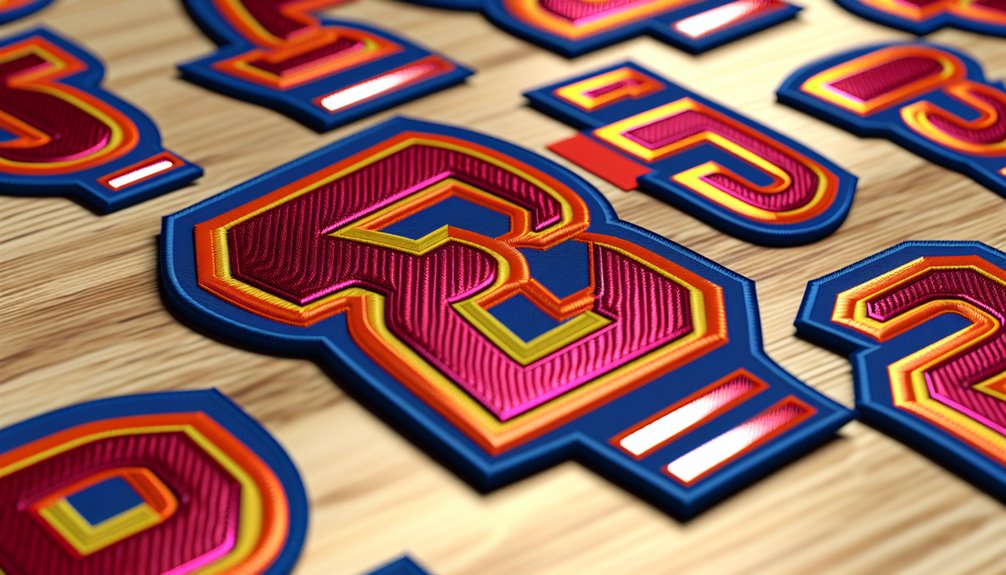
Embroidery techniques add a textured, upscale look to patches. While this method enhances durability and aesthetic appeal, it is generally more expensive and time-consuming, making it ideal for smaller, high-end custom orders.
When choosing a technique, consider patch placement, potential design software limitations, and the specific needs of your sports team to avoid costly mistakes.
Applying Patches to Uniforms
Once the appropriate printing technique for personalized player number patches has been selected, the next vital step involves the precise application of patches to the uniforms. This phase is essential for guaranteeing the longevity and professional appearance of uniform customization.
Here are the steps to guarantee successful patch application:
- Preparation: Confirm the uniform is clean and free of any wrinkles. This provides a smooth base for the patch, enhancing adhesion and alignment.
- Positioning: Place the patch precisely where it needs to be. It’s important to consistently position the patch in the same location on each uniform for uniformity across the team.
- Heat Application: Use a heat press or iron to attach the patch. The temperature and pressure must be accurately calibrated according to the fabric type and patch material to avoid damage.
- Cooling and Inspection: After applying heat, allow the patch and uniform to cool completely. Inspect each item to confirm the patch is securely attached and that there are no edges lifting.
Properly applying patches not only elevates the team’s appearance but also instills a sense of pride and identity among its members.
Maintaining Sports Clothing
Always turn the sports uniforms inside out before washing. This simple step helps to protect the patches from direct exposure to the harsh mechanical action inside the washing machine. Use cold water and a gentle detergent, setting your machine to a delicate cycle. Hot water and vigorous cycles can cause the patches to peel or fray.
Secondly, avoid using bleach or fabric softeners, which can degrade the adhesive and fabric of the patch. These chemicals are too harsh and can lead to premature wear and discoloration.
Air drying the uniforms rather than using a tumble dryer is preferable. High heat can melt the adhesive and distort the patch. If you must use a dryer, opt for a low heat setting.
Finally, for any loose edges or damage, consider a quick hand stitch to secure the patch. This preemptive measure prevents further damage and extends the patch’s life on the uniform.